What Is a Hybrid Building System?
In a hybrid building system, the building consists of two materials, each handling a separate role:
- Reinforced concrete: Columns, beams, and slabs — the frame that carries all vertical and lateral loads.
- Light steel: Exterior facade and interior partition walls — not load-bearing, serving only as infill and partitioning.
Once the reinforced concrete frame is complete, factory-made light steel wall panels are installed instead of classic brickwork or autoclaved aerated concrete block. The system is still considered new in Turkey; as MefSteel, we're sharing one of the projects in which we've pioneered this approach, with visual documentation, in this article.
Why Light Steel Instead of Brick?
In Turkey, brick or autoclaved aerated concrete has been used as the infill wall material in reinforced concrete buildings for decades. There are concrete reasons why this habit is starting to break in the industry:
| Criterion | Brick / AAC Block | Light Steel Panel |
|---|---|---|
| Weight (per m²) | 120 – 300 kg/m² | 20 – 40 kg/m² |
| Installation speed | Slow (laying + plastering + drying) | Fast (prefabricated, instant installation) |
| Thermal insulation | Poor – moderate | Good (integrated mineral wool) |
| Seismic behavior | Infill cracks and creates debris | Flexible, doesn't shatter, lightweight |
| Flat surface | Requires plastering | Ready-flat, drywall-ready |
| Heat storage capacity | High (heats slowly, cools slowly) | Low (fast response) |
A Step-by-Step Look at the Project
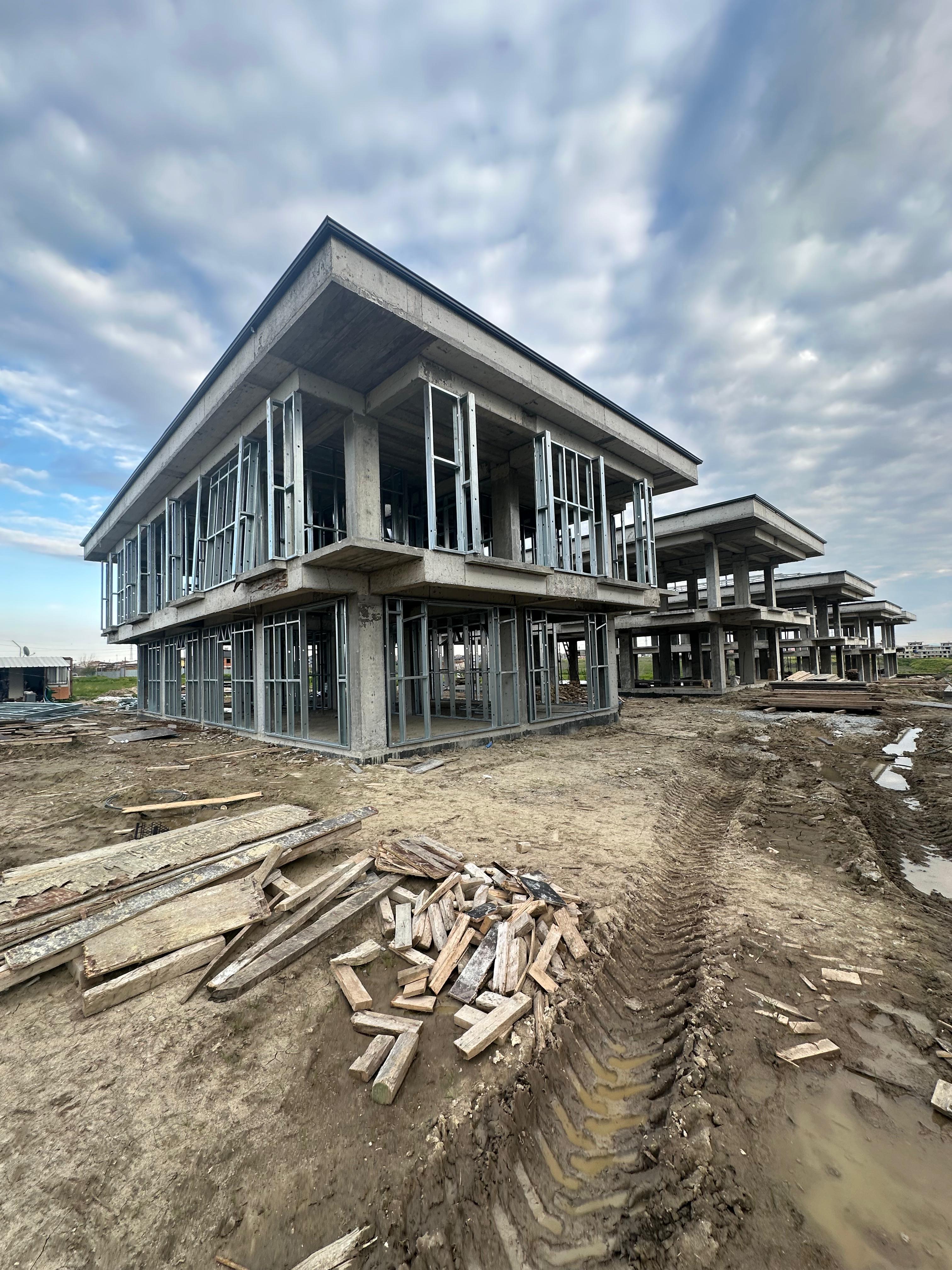
We share the villa complex we delivered in Tekirdağ as a live example of this system. The project, consisting of multiple villas, had all its walls closed in with light steel panels after the reinforced concrete frame was completed.
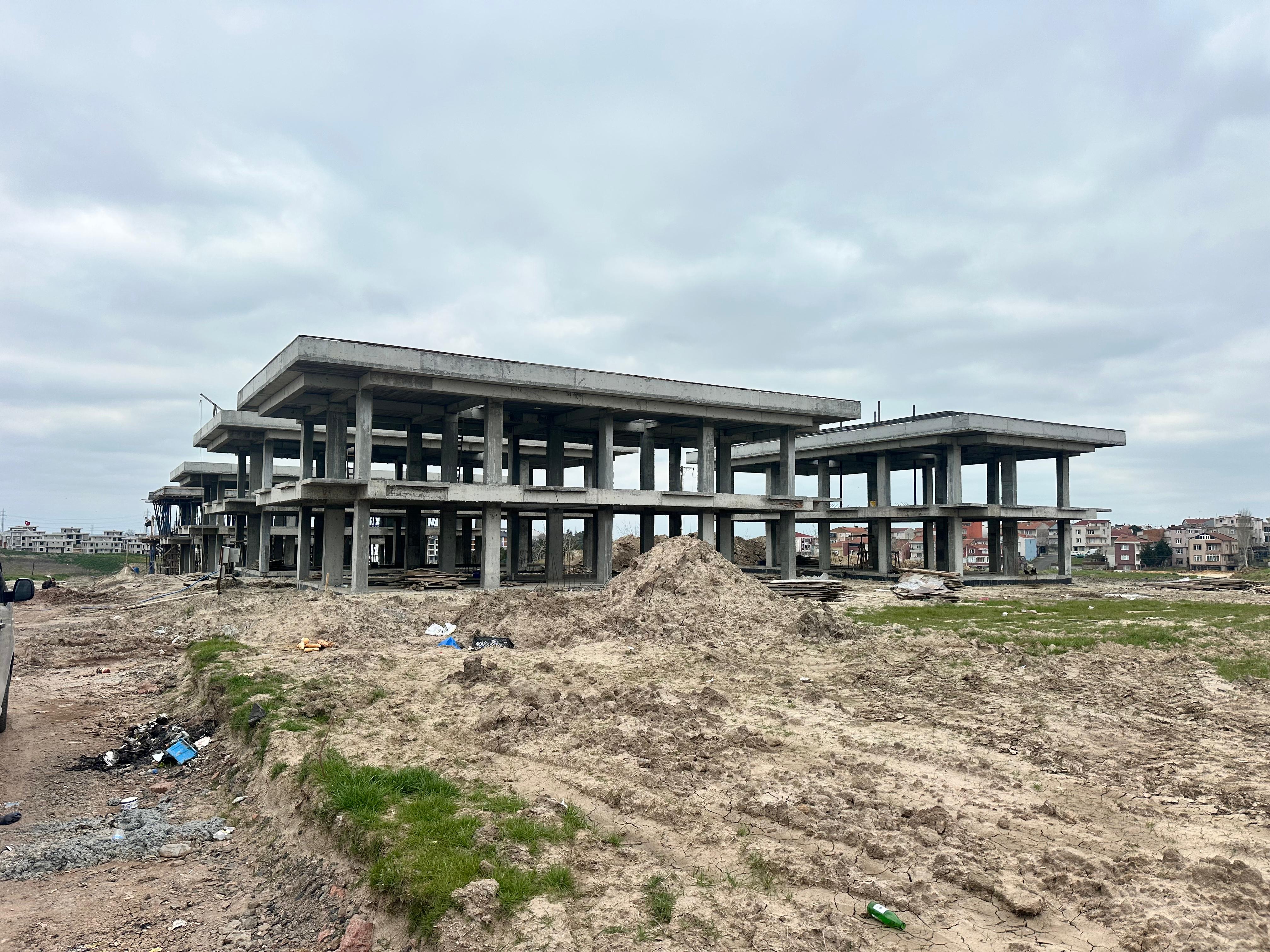
1. Starting Point: The Bare Reinforced Concrete Frame
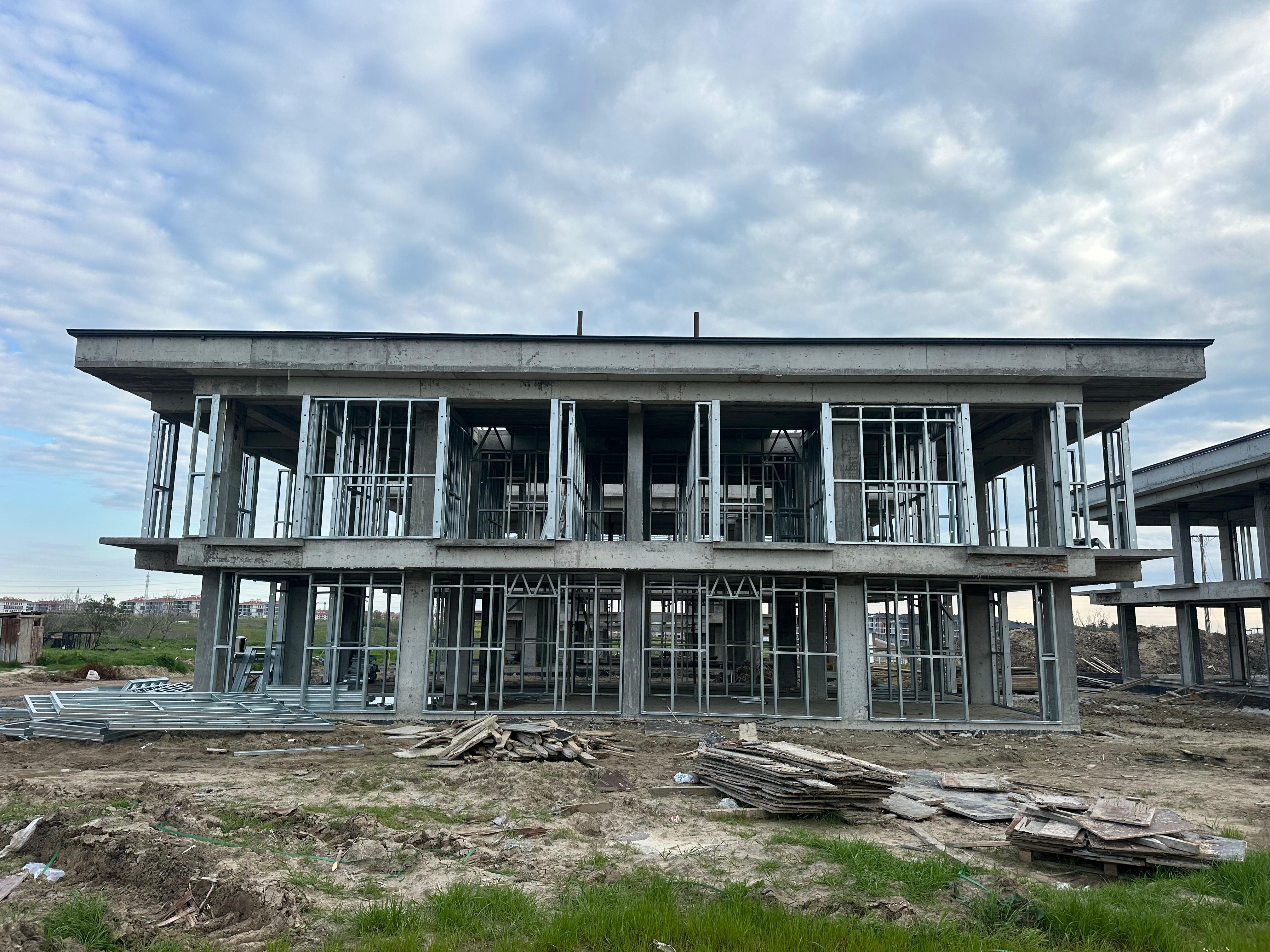
When the project reached us, the columns, beams, and slabs were ready. There were no walls between them yet. On a classic construction site, months of bricklaying would begin at this stage.
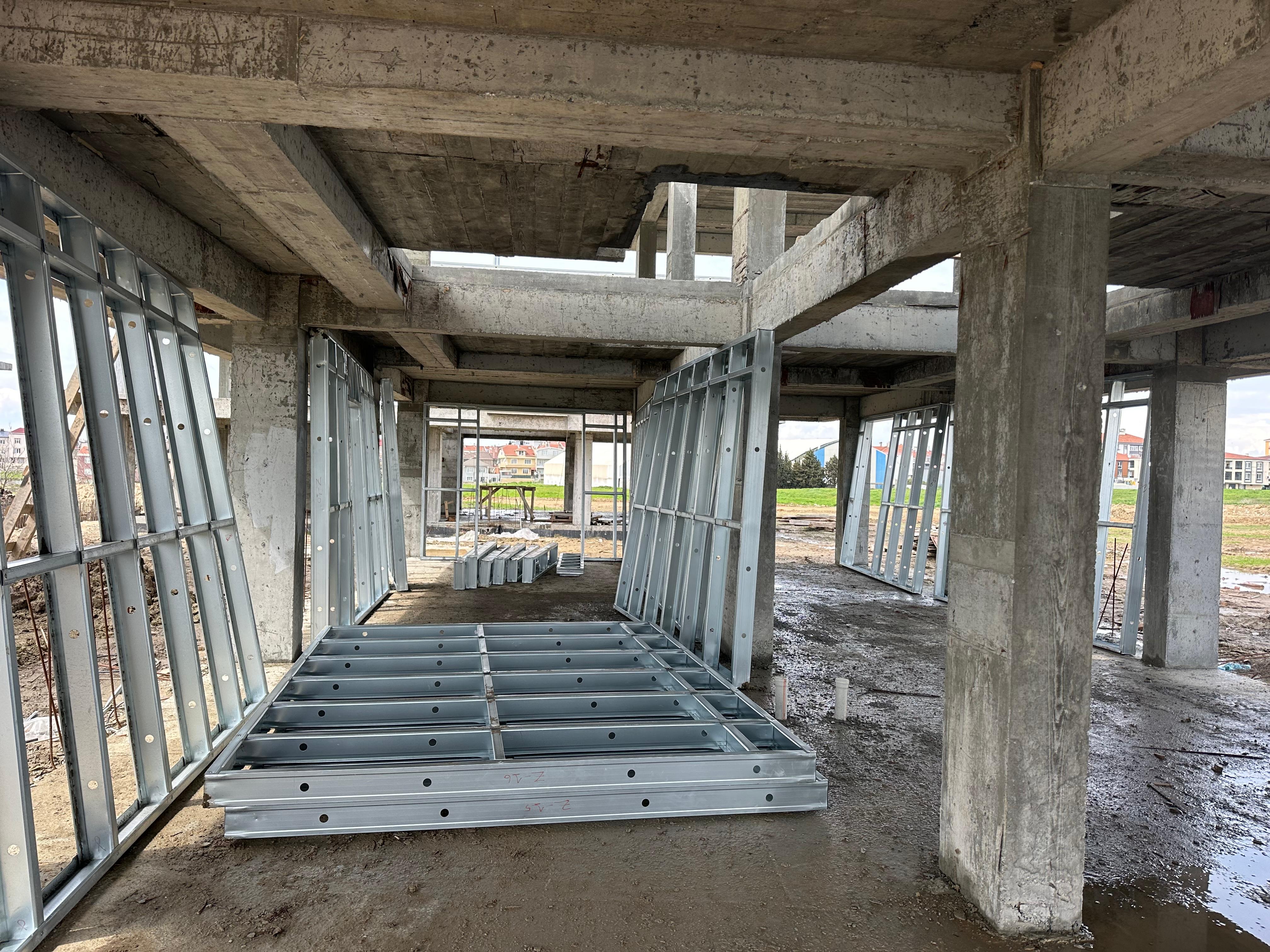
2. Panels Arriving From the Factory
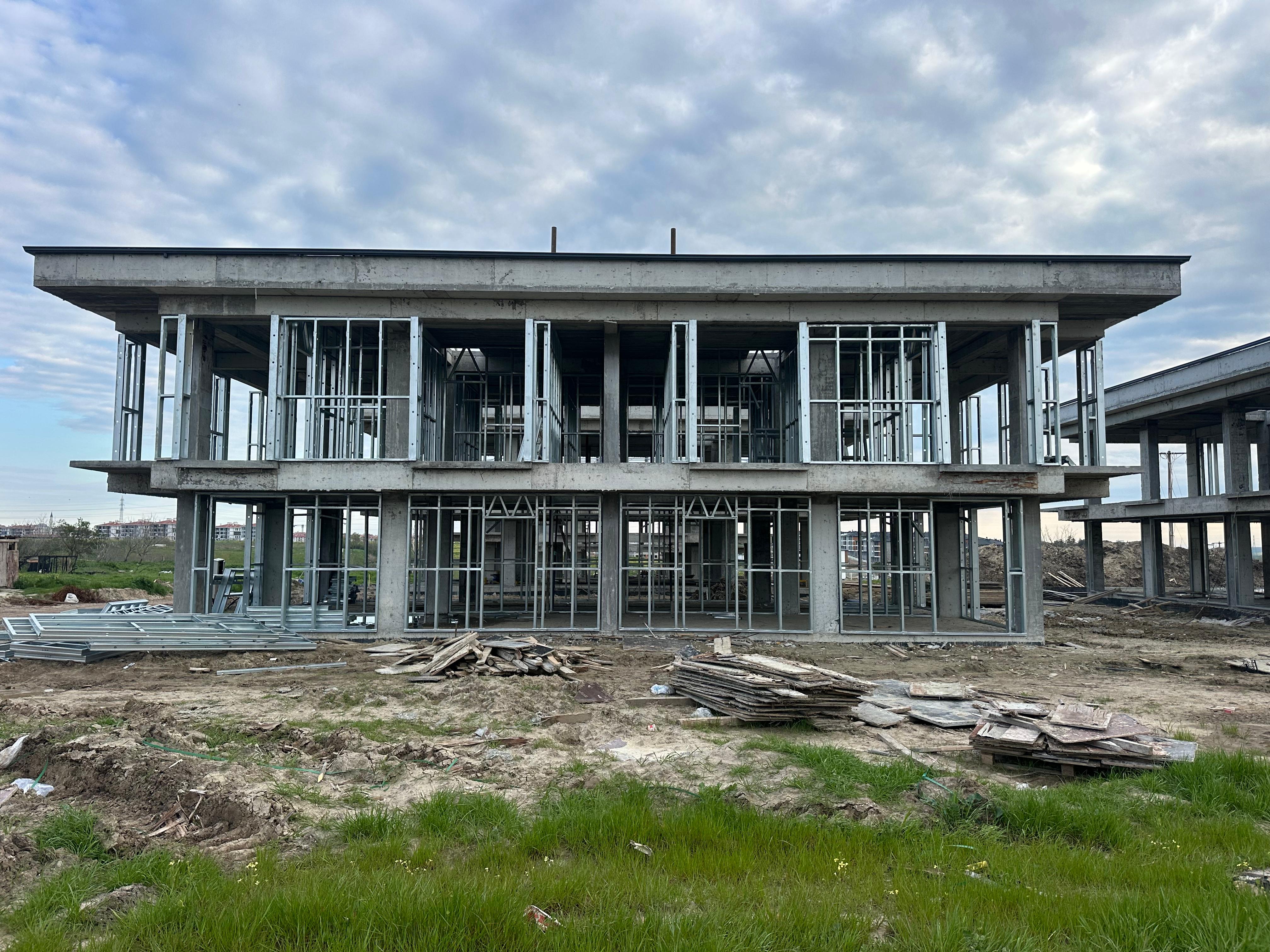
Light steel wall panels were manufactured to measure at our factory, keeping the site clean and orderly. The panels were laid flat on the ground and sequenced for installation order.
Factory-made panels on the site floor before installation. Each panel cut to size, with holes already punched.
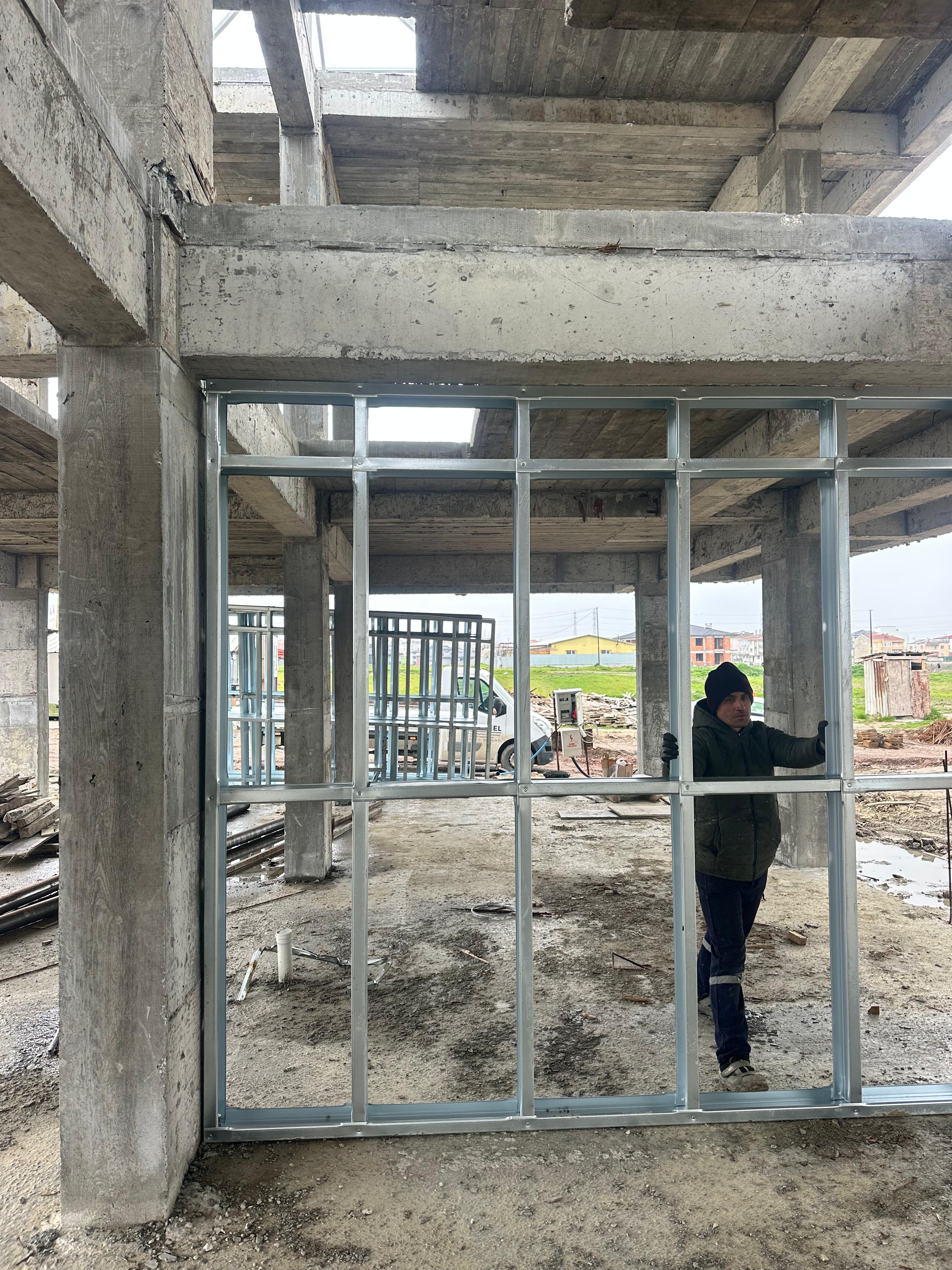
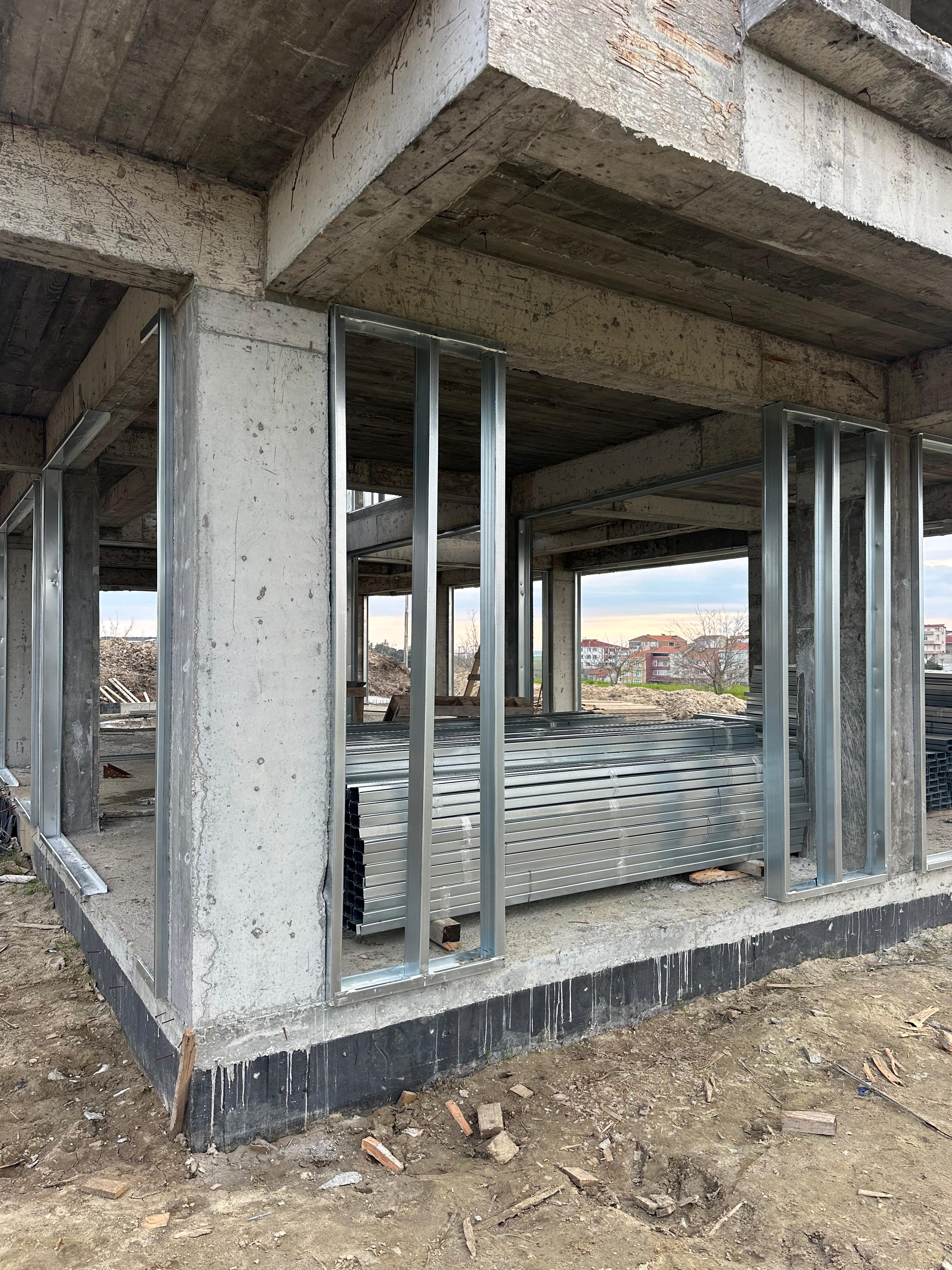
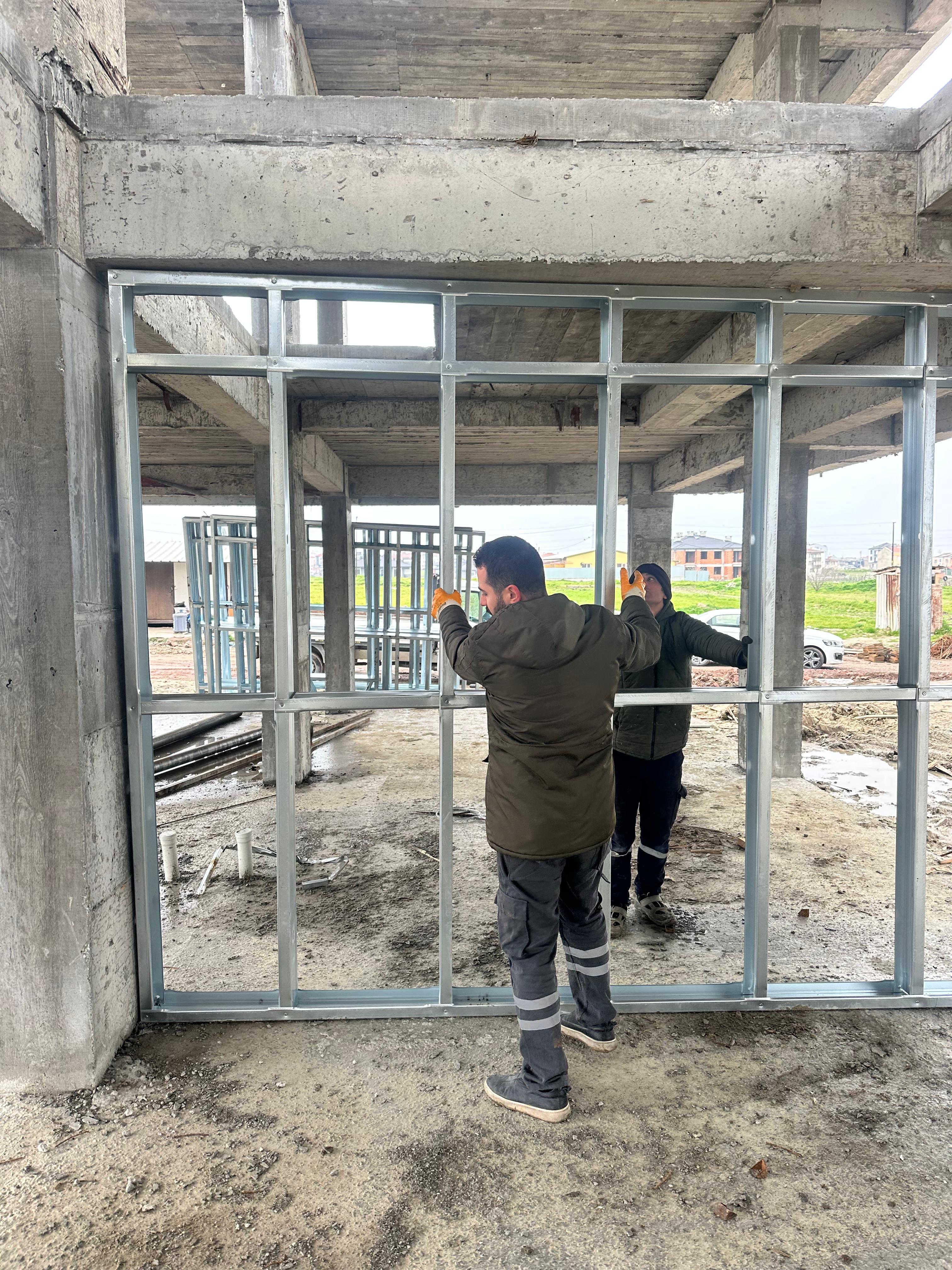
3. Panel Installation: Steel Between the Concrete
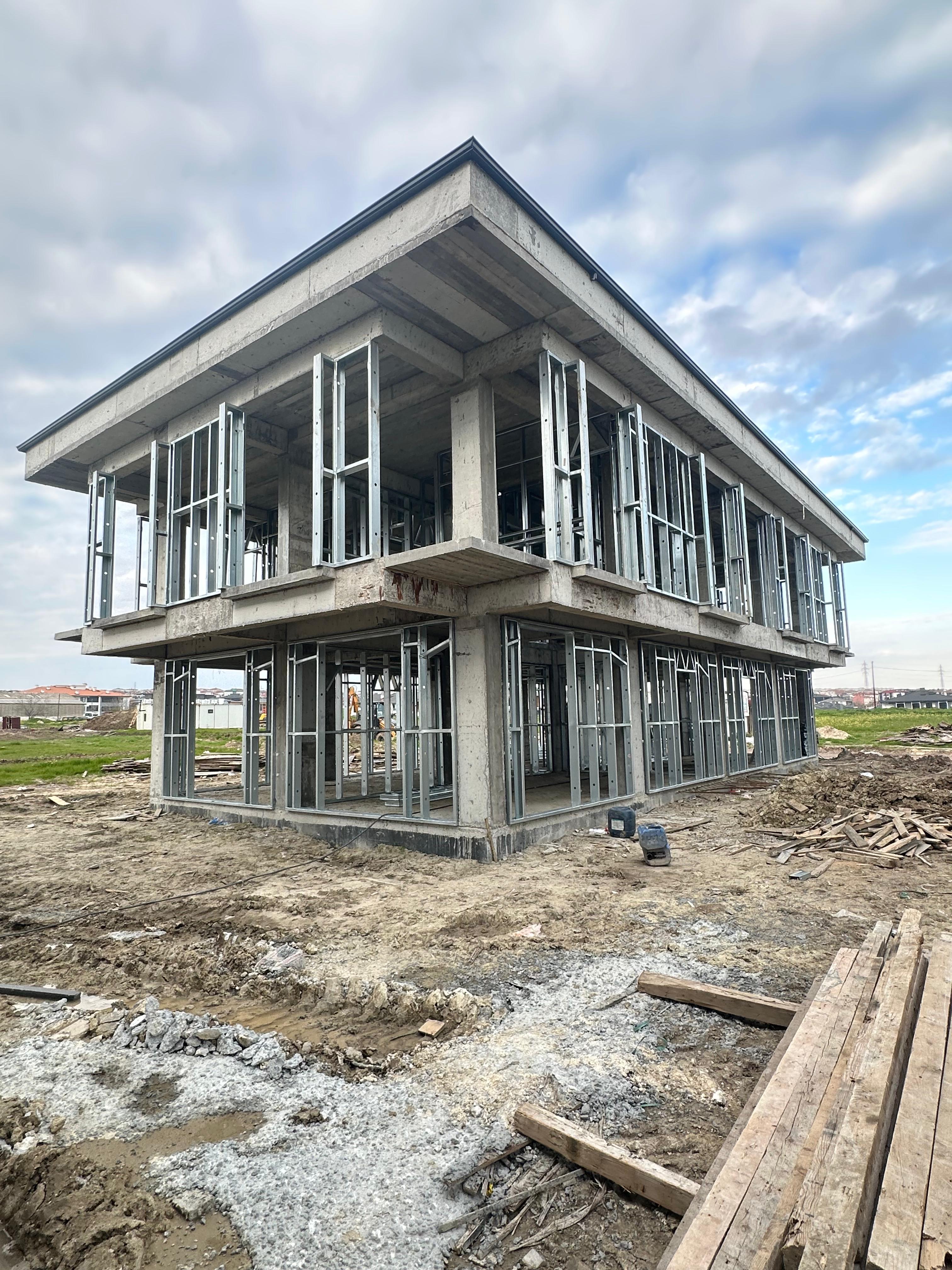
The light steel panel is lifted into the gap between the reinforced concrete columns and screwed to the top and bottom beams. A single panel goes into place in an average of 15-20 minutes. The same area that would take weeks with bricklaying closes up within days.
4. The Facade Takes Shape Quickly
Every passing day the building becomes more defined. Walls progress simultaneously on both the ground and upper floors; the speed of a reinforced concrete building combines with the efficiency of light steel.
5. The Roof: Light Steel Again
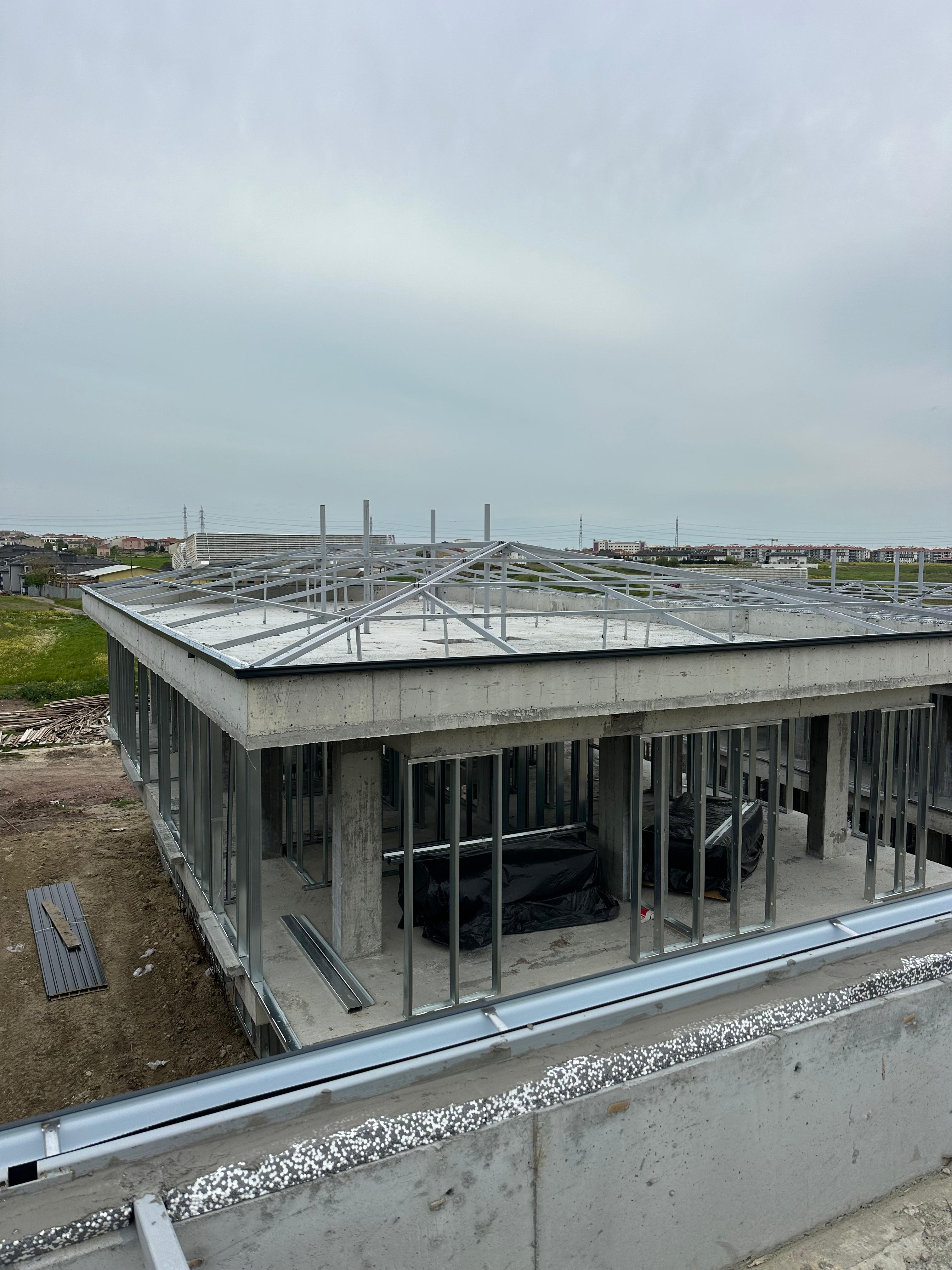
We carried the same system used for the walls to the roof. Light steel roof trusses were installed on top of the reinforced concrete slab. The covering was completed with trapezoidal sheet.
6. Insulation and Facade Cladding
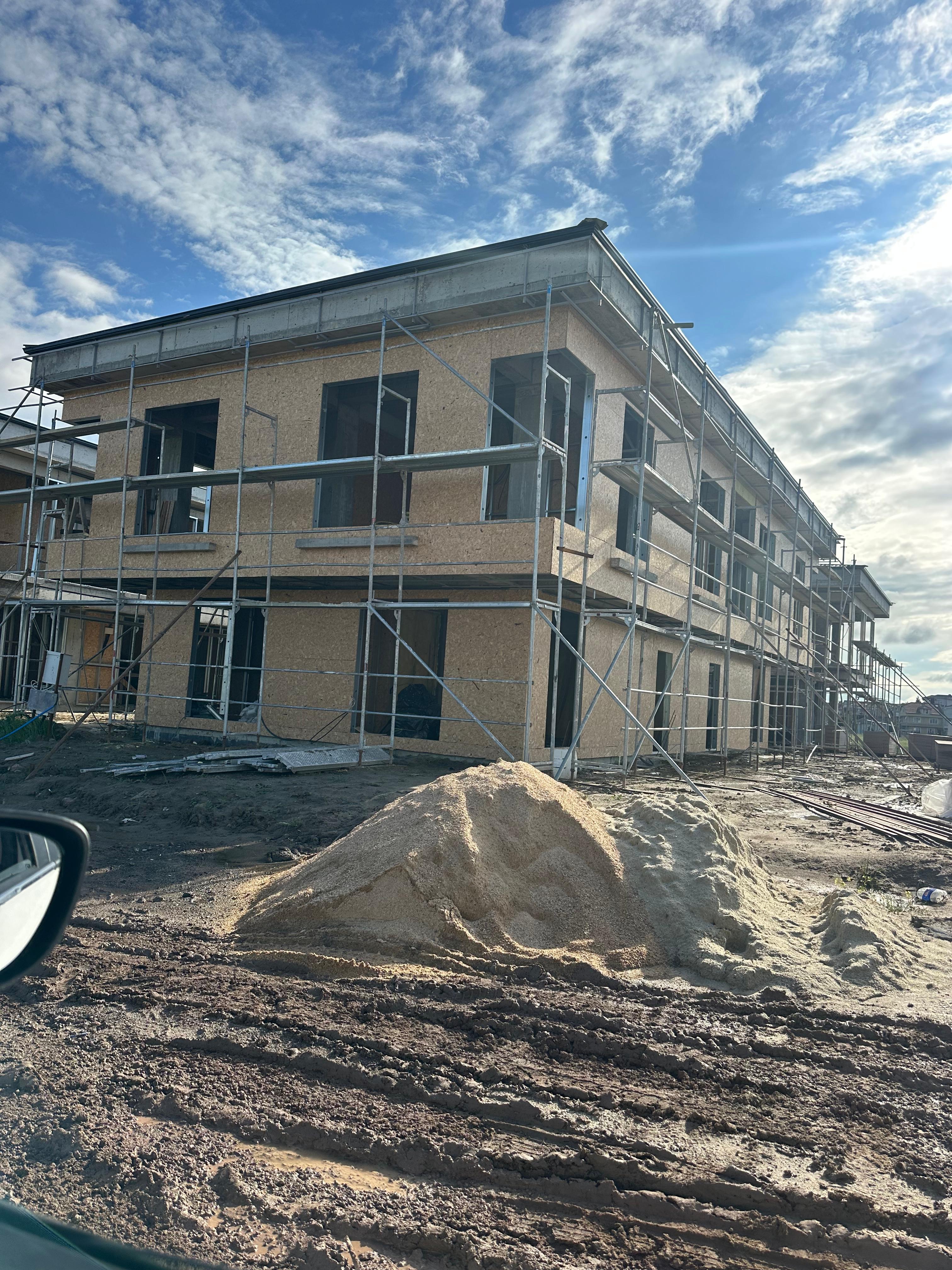
In the final stage, scaffolding was erected on the exterior facade. Mineral wool insulation was placed between the light steel panels. OSB board will follow, then the exterior facade cladding. At this stage the building gained both thermal and sound insulation.
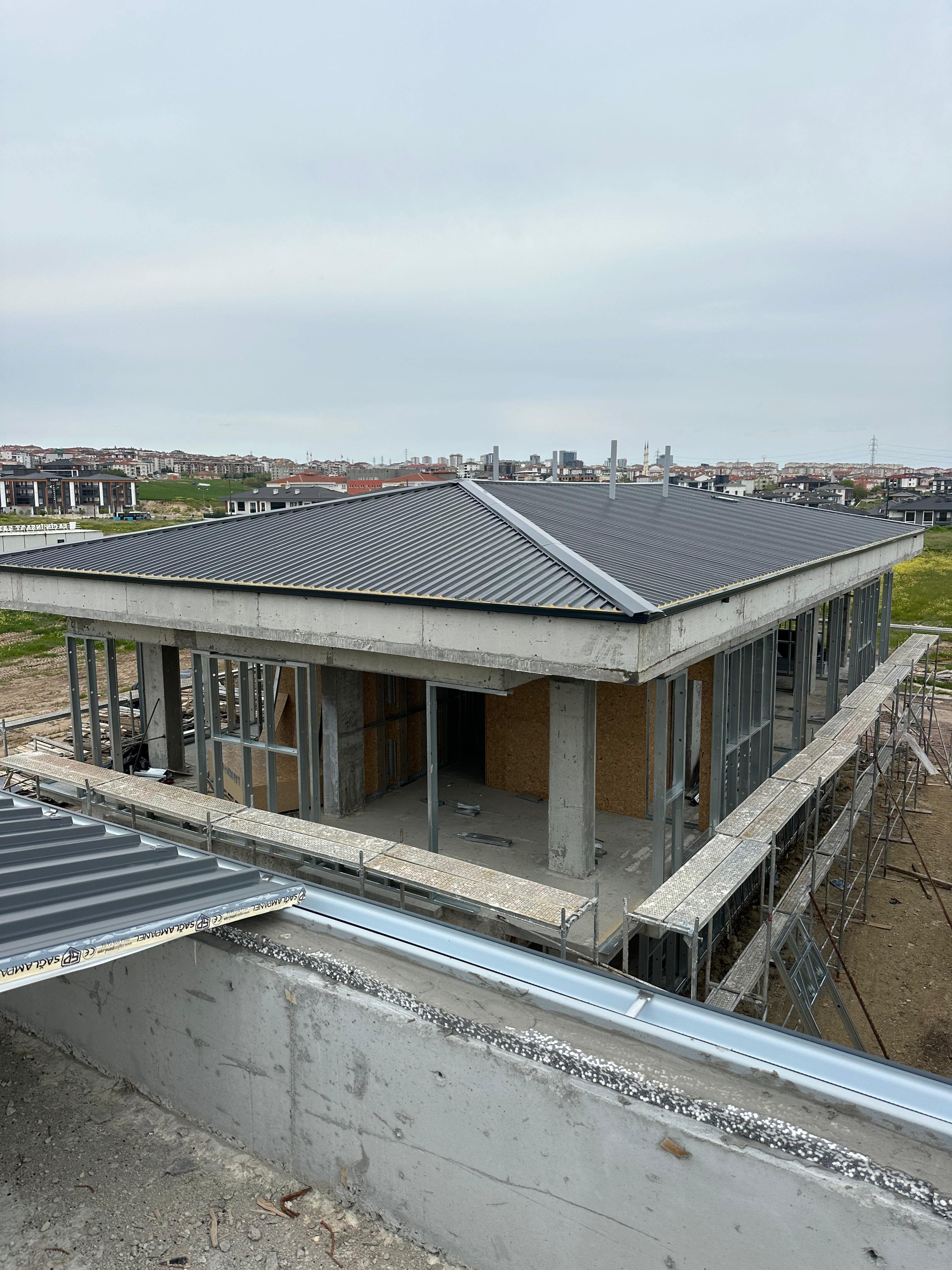
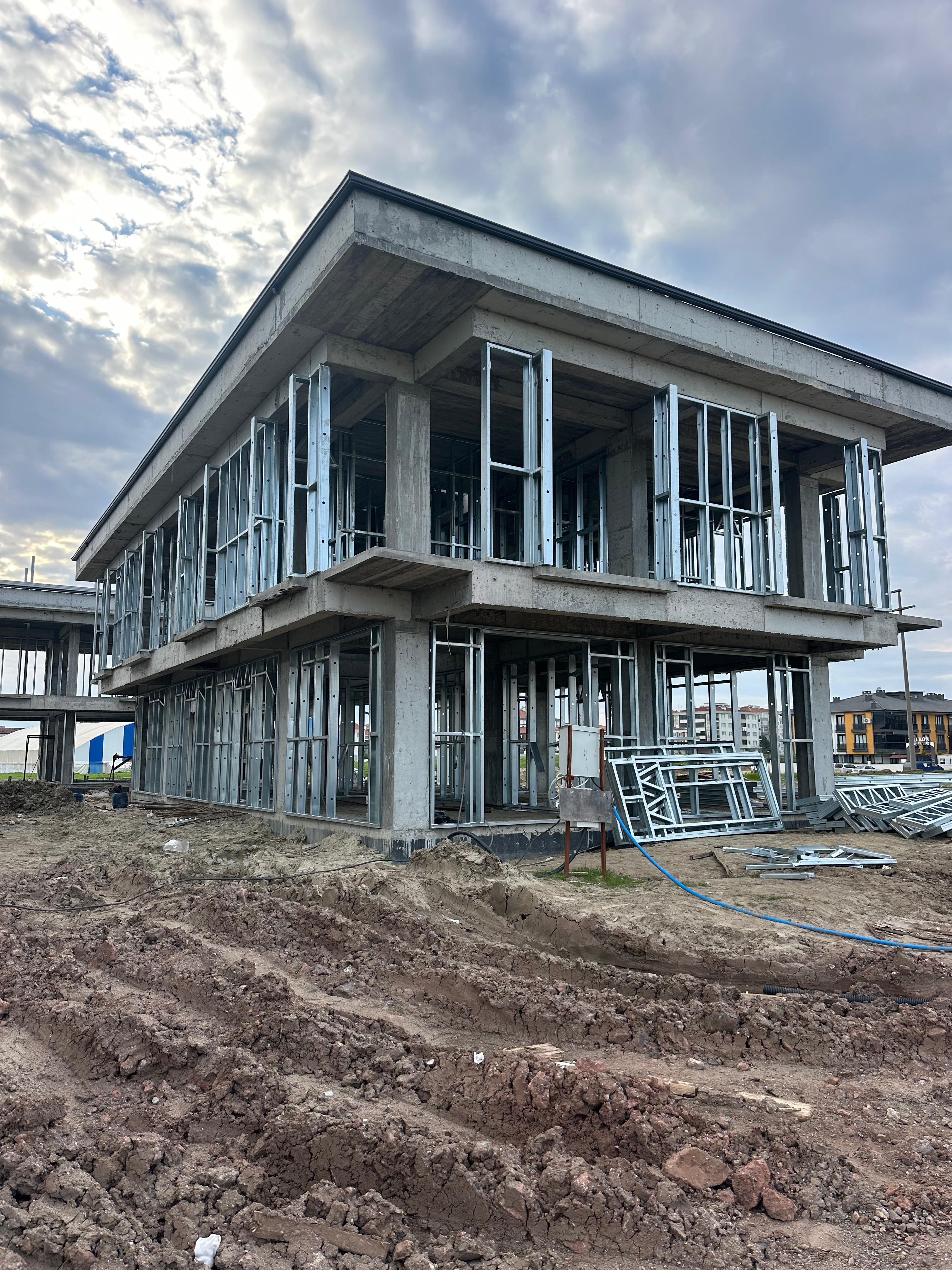
On this project, once the reinforced concrete frame was complete, installing all the walls was finished within a few weeks. On a building of the same size, bricklaying and plastering typically take 3-4 months. Early delivery provides direct financial benefit to both the customer and the contractor.
Advantages of the Hybrid System — In Summary
- Structural safety remains fully reinforced concrete: The load-bearing system doesn't change; engineering calculations are based on the concrete columns.
- Wall weight is reduced by up to 80%: The load on slabs and columns drops; seismic force is reduced as well.
- Construction speeds up: Prefabricated panels are installed within days, without waiting on bricklaying and plastering.
- Insulation comes integrated: Mineral wool is placed inside the panel; no need to add a separate thermal insulation layer.
- Less damage in earthquakes: Light steel panels don't crack into debris; thanks to their flexible structure, they don't collapse even if displaced.
- Interior spaces come out clean and even: Ready directly for drywall installation, no plastering needed.
Who Is This System Suitable For?
| Situation | Is the Hybrid System Suitable? |
|---|---|
| Reinforced concrete frame ready, walls not yet built | ✅ Very suitable |
| Fast delivery is required | ✅ Very suitable |
| Villa or mass housing project | ✅ Suitable |
| Building in a seismic risk zone | ✅ Suitable |
| Energy efficiency is a priority | ✅ Suitable |
| Brand-new project (no existing frame) | Full light steel may be more efficient |
Completing reinforced concrete buildings with light steel infill walls is still a rare application in Turkey. As MefSteel, we're trying to raise awareness in the industry through the projects we bring to the field in this area. If your frame is ready and you haven't planned the walls yet — let's talk.
Frequently Asked Questions
Will there be problems with the municipal building permit?
No. A light steel infill wall is not part of the structural system; it is evaluated as a non-load-bearing infill element. If your reinforced concrete project is approved, you don't need separate municipal approval for the wall material. Still, since regulations may vary, we recommend confirming with your project engineer.
Can I move a wall's location later?
Yes — this is one of the hybrid system's biggest flexibilities. Since light steel walls are not load-bearing, they can later be removed and relocated. This flexibility is a major advantage, especially in office or commercial use.
How does sound insulation compare to brick?
A mineral-wool-filled light steel wall provides equivalent or better sound insulation than standard brick. The result is especially good when combined with double-layer drywall. It's the preferred method for sound issues between units or apartments.